
The New Era of Intelligent Packaging Systems
Blog
24 March 2026The New Era of Intelligent Packaging Systems
There was a time when an entire packaging machine ran off a single motor. Through line shafts, cams, and mechanical linkages, motion was distributed across the system with impressive precision. Changeovers were manual, timing adjustments were mechanical, and performance was observed, not measured. Those machines were built to last.
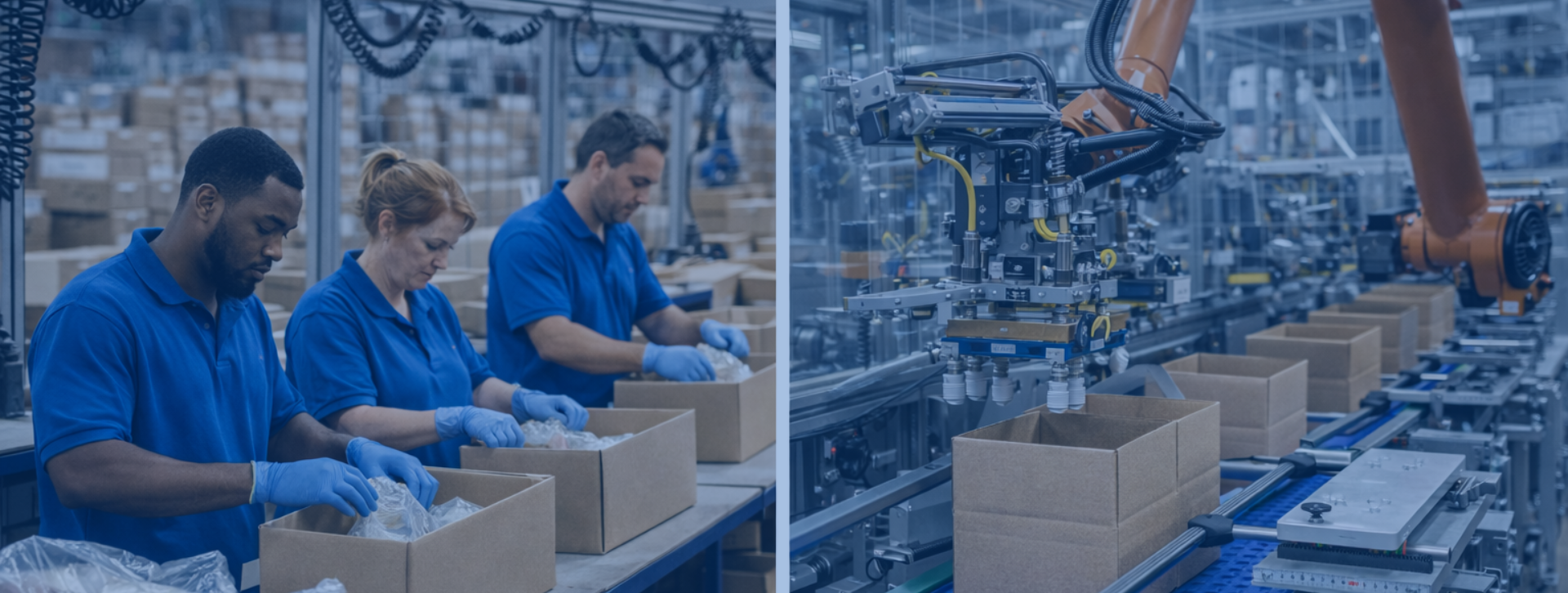
Today’s packaging lines look very different. Modern food and beverage systems include dozens of motors, servo axes, vision systems, safety circuits, and networked controllers. Mechanical timing has been replaced by PLC logic and synchronized motion control. Flexibility is no longer optional.
As packaging systems have become more advanced, they have also become more dependent on electrical and control infrastructure.
The Risk of Controls Obsolescence
Over time, PLCs reach end of life, drives are no longer supported, HMIs can no longer be updated, and critical replacement parts become harder to source.
Unlike mechanical wear, controls obsolescence often goes unnoticed until a failure shuts down production. A single legacy processor can stop an entire line.
Modernization is no longer just about increasing speed. It is about protecting uptime, standardizing platforms, strengthening cybersecurity, and ensuring long-term supportability. Addressing obsolescence is often the first step in building a more resilient packaging operation.
Packaging Equipment as a Data Asset
Beyond reliability, modern control systems unlock something older systems never could: visibility.
Today’s packaging lines generate actionable performance data. With integrated control systems, manufacturers can:
- Track real time production rates
- Measure downtime causes
- Monitor changeover efficiency
- Accurately calculate OEE
- Identify bottlenecks across conveyors, case packers, and palletizers
In food and beverage environments, small disruptions can ripple across the entire line. A conveyor slowdown affects filling. A case packing delay creates upstream accumulation. A palletizing issue impacts shipment schedules.
Data exposes these connections. OEE becomes more than a report, it becomes a tool for decision making and continuous improvement. Yet many facilities still underutilize the visibility already available within their equipment.
Bridging Legacy Equipment with Modern Performance
At Actemium Avanceon, we help food and beverage manufacturers modernize packaging operations while minimizing disruption. Our expertise includes:
- Controls upgrades and PLC migrations
- Electrical system redesign and standardization
- Obsolescence mitigation planning
- OEE implementation and performance analytics
- Integration of packaging systems with MES and WMS
From conveyors and product distribution to case packing and palletizing, we focus on connecting systems and unlocking measurable performance improvements.
Is Your Packaging Line Delivering Insight?
Packaging has evolved from mechanically synchronized equipment to intelligent, connected systems. The question is not simply whether your equipment runs. It is whether it provides the reliability, visibility, and scalability needed to continuously improve performance.
If you are planning a controls upgrade, managing component obsolescence, or looking to improve packaging line performance, it may be time to evaluate how well your current systems support long term reliability and real time insight.
Written by: Phillip Pezzopane
Blog, Packaging