Unlocking Hidden Value with ImpactNOW – High-Speed Filling Giveaway Reduction, ROI 1M+
Unlocking Hidden Value with ImpactNOW – High-Speed Filling Giveaway Reduction, ROI 1M+
ImpactNOW™ is a low-risk, low-cost starting point designed to uncover hidden losses and quantify ROI using your existing data—before committing to larger capital investments.
The Problem
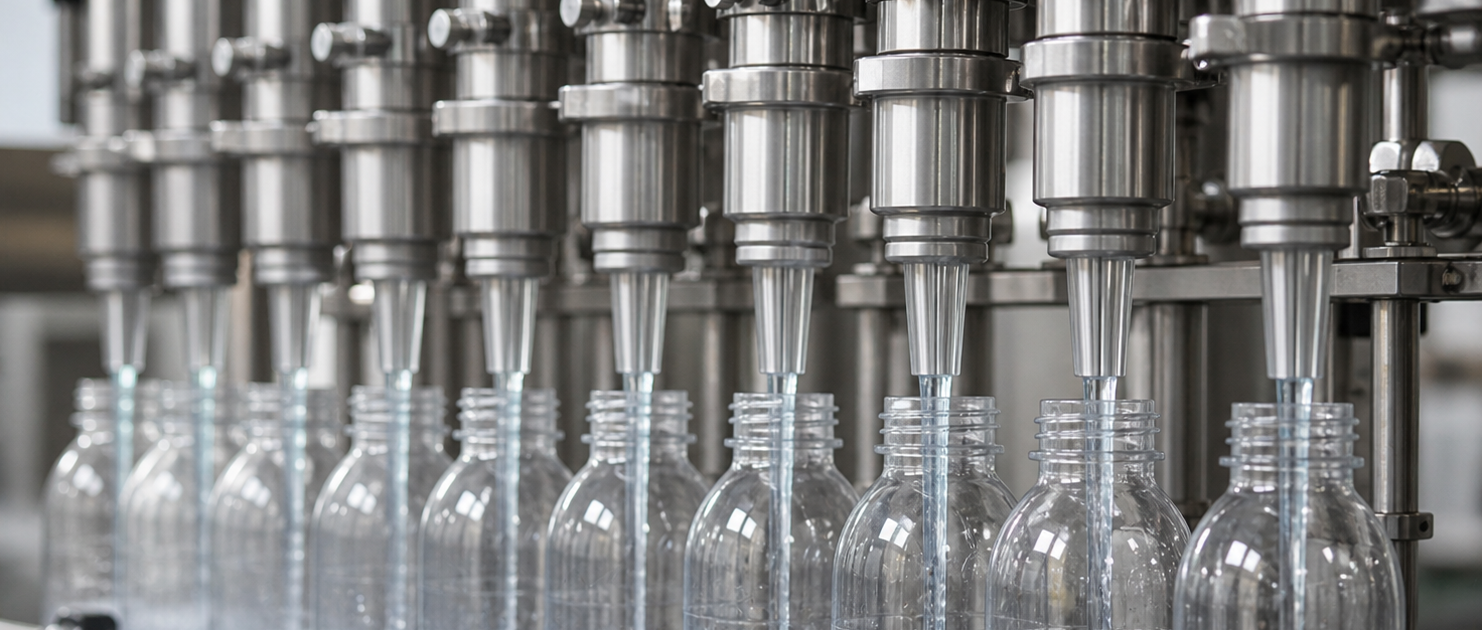
A North American manufacturer operating a high-speed, multi-head filling line believed the process was performing as expected. Production targets were consistently achieved, and average fill weights remained within specification.
However, when the operation was analyzed in detail, the data revealed a different reality. The line was generating $1.0M–$1.1M in annual product giveaway—a cost that had not been previously visible to the plant.
This gap existed because performance was evaluated using aggregated reporting. At the line level, averages suggested acceptable operation, but they masked significant variation at the individual filler head level.
As a result:
- Certain heads were consistently overfilling to compensate for variability
- Mechanical drift between heads went undetected
- Variation accumulated over time without clear attribution
- Product giveaway increased but was never isolated or quantified
From an operational standpoint, this variability was considered a normal characteristic of the process. There was no practical way to evaluate individual head performance or determine what level of variation was actually achievable.
This is a common challenge in high-speed filling environments. While large volumes of data are generated, it often lacks the structure and process context required to expose where losses are occurring or how significant they are.
The Solution
To quantify and isolate these losses, Actemium Avanceon applied its ImpactNOW™ methodology—a structured, rapid, low-risk approach to quantify operational opportunity and validate ROI using existing data before scaling investment.
The engagement began by converting raw historian data into a structured, process-aligned dataset. This included:
- Reconstructing operating cycles
- Normalizing timestamps
- Transforming more than 100 tags into per-head feature sets
This step created, for the first time, a high-resolution view of individual filler head performance.
With structured data in place, machine learning models were developed for each of the 32 filler heads. These models incorporated key process variables such as fill time, inflight weight, product density, flow rates, temperature, and pressure.
The models achieved strong predictive accuracy (R² > 0.90), enabling precise quantification of how each head responded to changing process conditions.
More importantly, this approach established a clear operational baseline:
- What “good” performance actually looks like
- What level of variation is realistically achievable
- Which heads were operating outside that range
This allowed the team to clearly distinguish between normal process variation and mechanical issues—turning previously hidden losses into actionable insight.
The Benefits
The ImpactNOW™ approach delivered measurable insight within days, not months, providing both immediate operational value and a foundation for longer-term improvement.
Immediate Impact:
- Identification of a malfunctioning filler head
- Targeted maintenance that reduced risk of unplanned downtime
- Immediate reduction in excess giveaway
Operational Visibility:
- Clear, data-driven understanding of head-to-head variability
- Ability to quantify performance at a granular level
- Benchmarking against best-performing heads
Strategic Foundation:
- Established baseline for predictive maintenance
- Validated feasibility of real-time optimization
- Created a repeatable framework for other lines and facilities
Perhaps most importantly, the plant moved from assuming variability was unavoidable to understanding exactly what was driving it—and how to control it.
The ROI
A focused overfill and underfill analysis across 5.1 million fills quantified the true financial impact of variability:
- Current overfill cost: $1.0M–$1.1M annually
- Achievable reduction: 4–8 grams per fill
- Projected savings: $300K–$800K per year (per line)
In addition, correcting the mechanically drifting head delivered an immediate:
- $40K–$50K benefit, while reducing underfill risk and improving compliance
These results demonstrate how small, unit-level variations—when multiplied across high-speed production—translate into significant financial impact.
The Next Steps
With the models validated and the opportunity clearly quantified, the next phase focuses on moving from analysis to real-time operational improvement.
This includes:
- Deploying an edge layer to stream high-frequency data from the filler
- Running machine learning models in real time at the line level
- Generating automated trim adjustments to reduce variation
- Monitoring each head for early signs of mechanical drift
This architecture is designed to scale, allowing the same approach to be replicated across additional fillers and facilities.
Over time, the process evolves from:
Reactive analysis → Predictive insight → Real-time, closed-loop optimization
See What’s Hidden in Your Filling Process
Most plants already have the data—they just lack visibility into where variability and loss are coming from.
ImpactNOW™ is designed to uncover and quantify those opportunities using your existing data—providing a clear, defensible ROI case before committing capital to broader initiatives.
Start with a focused assessment to determine if your process justifies further investment.