
Modernizing a Municipal Wastewater Facility with Centralized SCADA
Modernizing a Municipal Wastewater Facility with Centralized SCADA
Overview
Across North America, municipal utilities are facing growing pressure to modernize aging infrastructure while maintaining reliable operations and preparing for future expansion.
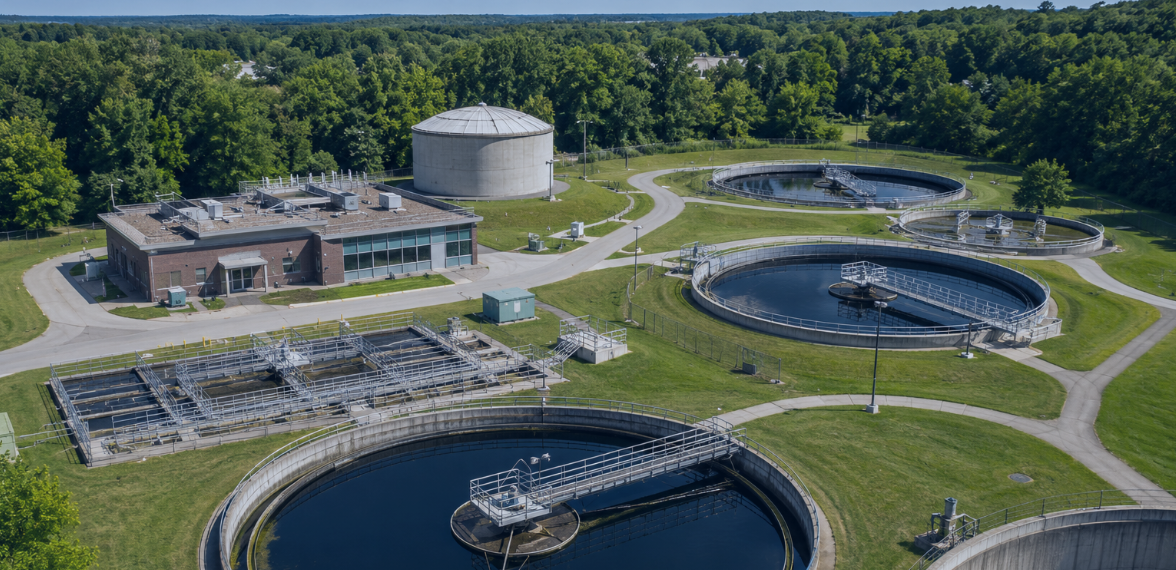
In this case, a municipal wastewater treatment facility was operating with limited visibility into its plant operations. While data existed across multiple systems, it was not centralized, making it difficult for operators to quickly understand performance or respond to issues.
To address these challenges, Actemium Avanceon partnered with the facility to implement a modern, centralized control system designed to improve visibility, standardization, and long-term scalability.
The Challenge
The facility faced several operational and technical limitations tied to its existing infrastructure.
There was no centralized view of plant assets or processes. Operators and maintenance teams had to navigate multiple systems to understand what was happening, which increased troubleshooting time and slowed response to issues.
At the same time, legacy hardware was approaching obsolescence, introducing both reliability concerns and increased cybersecurity risk.
Alarm management was another key issue. Alarm language and structure varied across different areas of the plant, making it harder for operators to interpret and act on events consistently.
As the facility looked ahead, it became clear that incremental fixes would not be enough. They needed a modernization strategy that could unify systems, reduce risk, and support future expansion, including integration of remote pump stations.
The Solution
Actemium Avanceon implemented a phased modernization strategy centered around a new, centralized SCADA system.
The solution integrated multiple plant process areas into a single platform, providing operators with a clear and consistent view of operations. Existing PLC systems were upgraded and standardized using a modern control platform, while new and updated control panels were designed to support the transition.
A key focus was standardization. Alarm structures, navigation, and operator interfaces were aligned across the system to improve usability and consistency. A Historian was also implemented to support plant-wide data collection and long-term analysis.
Rather than attempting a full system overhaul at once, the project was executed in phases. The first phase focused on modernizing the main plant and establishing the central SCADA system. A second phase is planned to extend this architecture to multiple remote pump stations.
Execution Approach
To manage complexity and minimize disruption to plant operations, the project followed a structured, sprint-based approach.
Work was organized by process area, with each area moving through design, development, and testing before progressing to the next. PLC and SCADA development were performed in parallel, allowing for more efficient delivery.
Factory Acceptance Testing (FAT) and Site Acceptance Testing (SAT) were used to validate each phase before deployment, reducing risk during implementation. Electrical design and panel updates were also executed in parallel to support the overall schedule.
Close coordination with plant stakeholders ensured that work aligned with operational constraints, particularly around downtime and system availability.
Results and Impact
The modernization effort has already established a stronger operational foundation for the facility, with improved visibility, standardized system design, and a scalable architecture that supports future expansion. As additional phases are completed, the facility will be positioned to operate with greater efficiency, consistency, and long-term reliability.
Conclusion
This project demonstrates the value of a structured, standards-based approach to modernization.
Rather than replacing systems in isolation, Actemium Avanceon delivered an integrated solution that improves visibility, reduces risk, and supports future growth. The phased approach allowed the facility to modernize without disrupting operations, while the scalable architecture ensures that future expansions can be integrated with minimal effort.
For municipal utilities facing similar challenges, this approach provides a clear path toward more reliable, secure, and efficient operations. Connect with Actemium Avanceon to learn how centralized SCADA and phased modernization strategies can improve visibility, reliability, and long-term scalability.